
- August 25, 2026|
- Doors|
- sandymount_admin
Connecting your indoor living space to the garden is easily one of the most exciting home upgrades you can undertake. Whether you are swapping out an old set of patio doors or planning a brand-new extension, deciding between sliding doors and bifolds usually boils down to two simple things: how you plan to use the room every day, and how much you want to spend on the project.
At Sandymount Windows & Doors, we take pride in offering high-quality windows and doors designed to improve the performance, security, and visual appeal of your property.
When comparing the sliding door vs bifold door cost, understanding where your money goes helps you make an informed decision without unexpected surprises. This guide breaks down the true investment of both door styles to help you find the best option for your home.
In short, it’s tough to give a clear answer, as the cost of both sliding patio doors and bifolds depends on a number of factors. These include the number of panels, the size of the project and the material you choose. They often come in at a similar price point, and both are usually more expensive than French doors (typically the cheapest option for a patio door), with the right choice for you depending on your priorities.
The upfront investment: How door type sets your starting price
When looking purely at initial supply costs, sliding patio doors often feature a slightly lower entry price point for smaller openings, while bifold doors require a higher initial investment due to their mechanical complexity.
A standard two-panel sliding glass door relies on a track system with simple inline running gear. Because it uses fewer moving components, the manufacturing overhead for a basic sliding door framework is relatively modest.
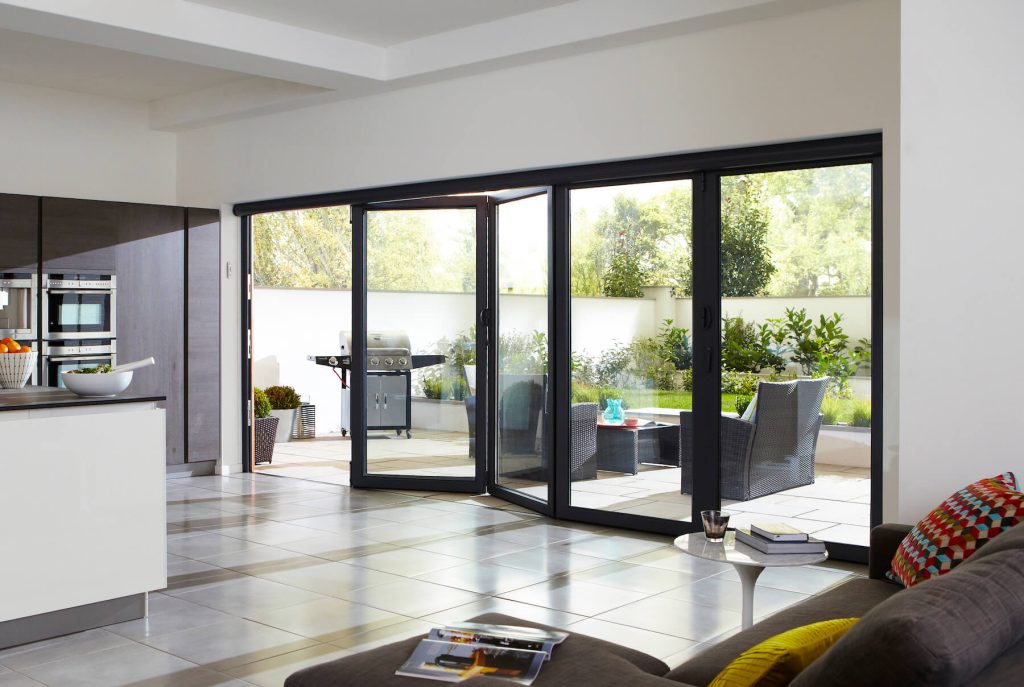
In contrast, bifold doors use intricate top-and-bottom track assemblies, multiple sets of hinges, shootbolt locking systems, and dedicated intermediate carrier rollers. Every additional door panel requires its own set of seals and hardware. As a rule of thumb, a three-panel aluminium bifold door set typically carries a higher base price than a two-panel sliding setup covering the exact same structural opening.
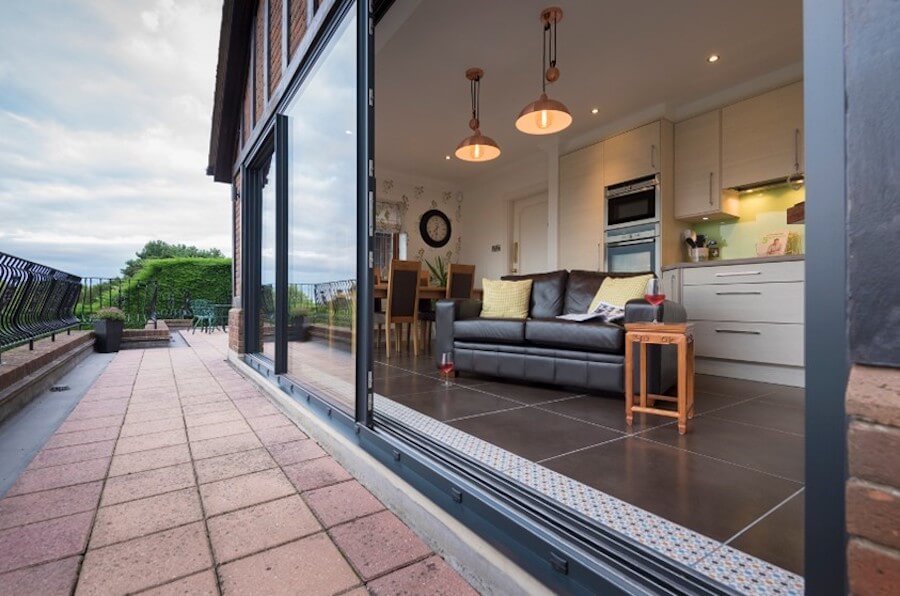
Framing the numbers: How aperture size and panel count drive overall costs
The overall size of your opening and your chosen panel configuration are the single biggest factors influencing your final price.
- Number of panels: With bifold doors, price scales directly with the number of panels. A three-panel bifold setup will cost less than a five-panel or six-panel system because each extra leaf adds dedicated hardware, frame profiles, and assembly labour.
- Structural door size: Large aperture spans requiring custom engineering increase overall manufacturing costs regardless of the door type.
- Glass pane dimensions: Modern sliding doors feature expansive glass panes that can stretch up to several metres wide per panel. While this requires fewer mechanical joints, manufacturing ultra-large single glass units involves specialist handling, pushing up the price per square foot of glass.

Beyond the glass: Specification choices and installation complexity
The specifications you choose for your glass frames and glazing play a massive role in shaping your final invoice.
Glazing Specification and Glass Type
Upgrading from standard double glazing to solar-control glass or acoustic glass adds to the material costs. If you choose triple glazing for maximum thermal efficiency, the additional weight requires heavy-duty door frames and high-capacity rollers, which increases the overall expense for both sliding and folding systems.
Installation Costs and Labour
Labour cost varies depending on structural complexity and access requirements:
- Structural prep work: Installing heavy aluminium sliding doors with wide glass panels often demands specialist lifting equipment or larger fitting teams, which can increase installation costs.
- Track alignment: Bifold doors require absolute precision when levelling threshold tracks across wide openings to ensure the concertina folding action operates smoothly for years to come.
- Site conditions: Replacing existing French doors or old timber patio doors with wide-span aluminium frames may involve inserting a new steel lintel, directly impacting total installation expenses for both systems.
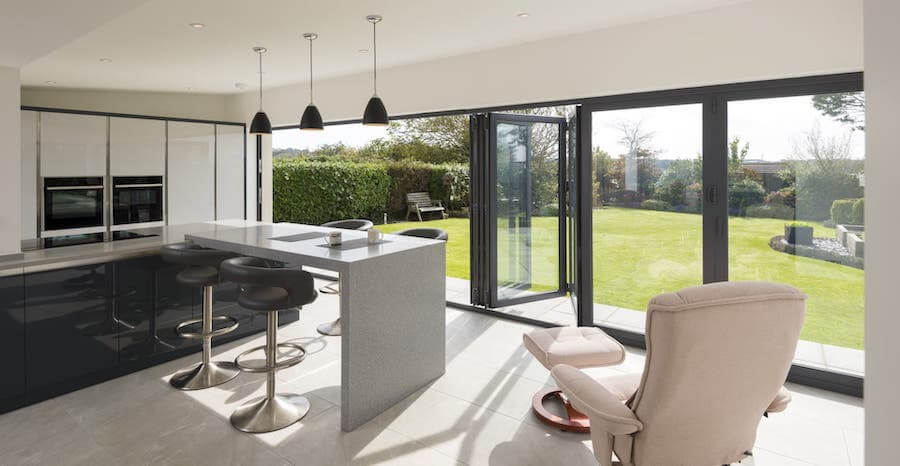
Long-term returns: Maintenance requirements and property value
Evaluating long-term value means looking beyond the initial installation cost.
Aluminium bifold doors and modern sliding doors both offer exceptional durability compared to older uPVC doors or traditional timber variants. Aluminium frames will not change shape or degrade, ensuring your investment stands up to heavy daily use and harsh weather for decades.
In terms of ongoing maintenance, sliding doors have fewer mechanical moving parts, resulting in lower long-term repair costs. Keeping the bottom track clean of grit and leaves is usually all that is needed. Bifold doors require occasional track cleaning, hinge lubrication, and lock adjustments to keep their multi-panel alignment pristine. Both styles add clear aesthetic value to your property, making your home significantly more appealing to future buyers.
Thermal performance: Impact on long-term energy bills
A common misconception is that wide glass doors cause significant heat loss. Thanks to modern manufacturing, both bifold doors and sliding doors provide superb energy efficiency that helps keep energy bills manageable throughout the year, with sliding doors boasting a slightly better performance.
Modern aluminium systems feature polyamide thermal breaks built directly into the frames to block cold bridging. However, frame ratio plays a key role:
- Sliding doors: Feature ultra-slim sightlines and fewer total frame breaks, allowing for larger continuous glass areas. With argon-gas filled low-E double or triple glazing, they offer outstanding thermal performance.
- Bifold doors: Have multiple vertical frame sightlines where the panels meet. Whilst every join between panels creates a potential point for minor thermal transfer, premium bifold systems counteract this with high-performance weather gaskets and multi-point sealing, keeping cold draughts out effectively.
Investing in higher-specification glass upfront pays off over time through improved comfort and reduced heating costs.
Finding the best option for your home with Sandymount
Choosing between sliding doors and bifold doors comes down to balancing your vision for natural light, floor space, and project budget. If you want uninterrupted garden views with minimal frame sightlines, sliding doors are hard to beat. If you want the ability to fold back an entire wall to open your home completely to the outdoors, bifold doors offer unparalleled versatility.
At Sandymount Windows & Doors our team handles every aspect of your project in-house to ensure high standards from initial design to final fitting, great for your peace of mind throughout. Whilst these doors are completely bespoke, we do have a range of standard sizes available for you to choose from.
Get in touch with our expert team today to discuss your project, arrange a consultation, or explore our full product range in person:
- Online contact form: Contact Sandymount Windows & Doors
- Telephone: 01793 230684
- Email: windowsanddoors@sandymount.co.uk
- Visit our showroom: Sandymount Showroom